Movement Brain Breaks for Kids Improves Classroom Focus
Why Movement Brain Breaks Help Students Focus Before a Lesson
Your students are wiggling in their seats. Side conversations are starting. You've repeated directions three times, and you haven't even started teaching yet.
Sound familiar?
When students are restless or struggling to pay attention, our first instinct is often to ask them to sit still, quiet down, and focus.
But what if the best way to prepare students for learning isn't to ask them to sit still?
What if it's to get them moving?
A short movement brain break before a lesson can help students release restless energy, reset their attention, and transition into learning.
And the best part? You don't need complicated activities, extra materials, or a complete change to your lesson plan.
Sometimes, all it takes is a few minutes of dancing, stretching, or playful movement.
What Happens in the Brain When Students Move?
Movement does more than exercise the body. Physical activity also influences the brain systems involved in attention, alertness, and self-regulation.
When children engage in physical activity, several things happen:
1. Movement Increases Alertness
Physical activity increases heart rate and circulation, helping students become more physically alert. Movement also influences brain chemicals associated with motivation and attention.
For students who are feeling sluggish or mentally tired, a movement break may help them feel more awake and ready to participate.
2. Movement Can Support Executive Function Skills
Executive functions are the mental skills students use to manage their attention and behavior.
These include:
Inhibitory control: Pausing before acting and managing impulses.
Working memory: Holding and using information while completing a task.
Cognitive flexibility: Shifting between activities, instructions, or ways of thinking.
These skills are especially important during classroom transitions, independent work, and teacher-led lessons.
Research suggests physical activity breaks may support some aspects of attention and executive functioning, although results vary depending on the activity, duration, and students involved.
3. Movement Can Help Students Return to On-Task Behavior
One of the most useful findings for teachers is that classroom physical activity can help students spend more time engaged in learning.
The Centers for Disease Control and Prevention identifies improved concentration, classroom engagement, and on-task behavior among the potential benefits of classroom physical activity.
In other words, taking a short break from instruction doesn't necessarily mean losing valuable learning time. It helps students use the next part of the lesson more effectively.
Why Try a Movement Brain Break Before a Lesson?
Think about a typical school day...
Students move from morning work to reading, reading to math, math to lunch, and then back to more learning. Each transition requires students to shift their attention and adjust their behavior.
That can be challenging, especially after long periods of sitting.
Instead of waiting until students are completely disengaged, try adding a planned movement break before a lesson that requires sustained attention.
For example:
Before math: Try a quick dance or movement challenge before students settle into problem-solving.
After independent reading: Use stretching or movement to transition into a new subject.
After lunch: Give students an opportunity to move before beginning afternoon instruction.
During a long lesson: Pause for a brief movement break when you notice attention beginning to fade.
The goal isn't to make students tired. It's to give them a chance to move, reset, and prepare for what's next.
How Long Should a Classroom Movement Brain Break Be?
You don't need to turn every transition into a 15-minute activity.
For a quick classroom reset, try starting with 2–5 minutes of movement.
Short breaks are practical for busy classroom schedules, although research has not established that two minutes is always enough to improve attention. Some studies have found stronger on-task behavior benefits from somewhat longer or more active breaks.
Experiment with what works for your students.
A simple routine might look like this:
Move: Play a short dance or movement activity.
Reset: Lower the music, pause, and take a few comfortable breaths.
Refocus: Display the next lesson or classroom agenda.
Begin: Give students a clear direction for getting started.
The important part is creating a predictable transition from movement back into learning.
Try This Fun Halloween Dance Party Brain Break!
Who says a classroom brain break can't feel like a party?
Bring a little spooky fun into your elementary classroom with our Halloween Dance Party Brain Break from My Mindful Class!
This Halloween-themed movement activity is a fun way to give students a chance to get up, dance, and enjoy a quick break from sitting.
It's a great option for:
A movement break before a lesson
Halloween classroom celebrations
An afternoon energy reset
Indoor recess activities
A fun transition between classroom activities
Press play, clear a little space, and let your students enjoy a spooky dance break!
Students can participate with movements that are comfortable and accessible for them, including seated dancing or upper-body movements.
After the video, invite students to return to their seats, take a moment to settle, and get ready for the next activity.
4 Tips for Making Movement Brain Breaks Work in Your Classroom
1. Use Movement Before Students Become Overwhelmed
You don't have to wait until students are talking over one another or struggling to sit still.
Try incorporating movement proactively, especially before lessons that require extended concentration.
2. Establish Clear Expectations
Before pressing play, remind students about personal space, safe movement, and how they'll know when the activity is finished.
Predictable expectations make movement breaks easier to manage.
3. Match the Activity to Your Students' Needs
Not every class needs a high-energy dance party.
Sometimes students benefit from dancing and jumping. Other times, gentle stretching, marching, or slower movements may be a better fit.
Pay attention to how your students respond and adjust accordingly.
4. Make the Transition Back to Learning Predictable
A movement break works best when students know what happens afterward.
Use a familiar attention sound, visual schedule, or brief countdown to signal that it's time to return to the lesson.
The more consistent your routine becomes, the easier it may be for students to transition between activities.
Make Classroom Brain Breaks and Transitions Easier With My Mindful Class Daily Hub
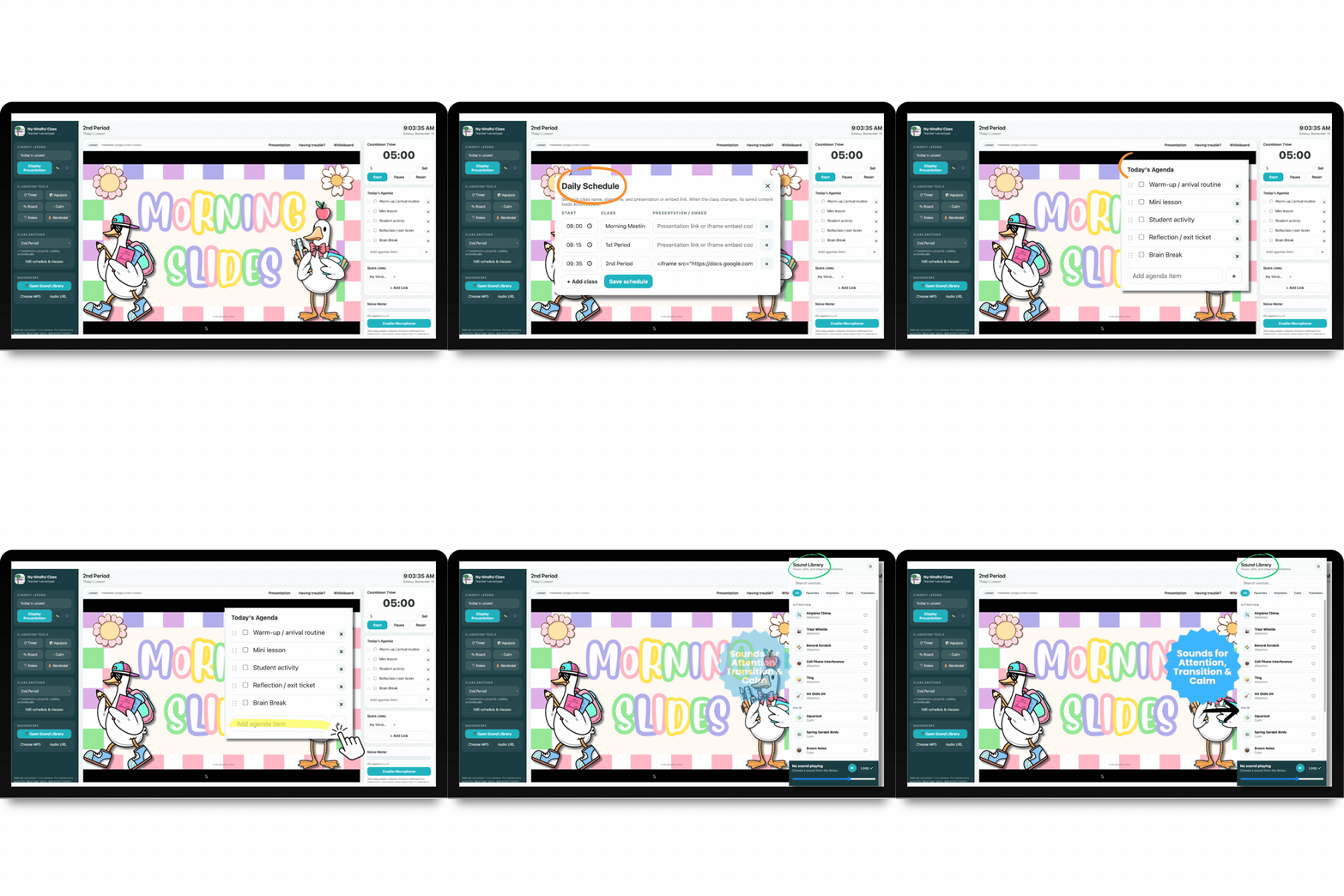
Movement breaks are helpful, but constantly switching between videos, lesson slides, classroom timers, and schedules can create another challenge for busy teachers.
That's why we created the My Mindful Class Daily Hub.
Our all-in-one classroom tool helps teachers organize the everyday routines that keep learning moving.
With the Daily Hub, you can:
Display your classroom schedule and lesson slides.
Use classroom timers to support activities and transitions.
Play attention sounds to help signal changes in activities.
Access calming and focus spaces for different classroom needs.
Keep frequently used classroom resources and links organized.
Instead of searching through multiple browser tabs during a lesson, you can keep your classroom tools together in one convenient place.
Explore More Ways to Help Students Refocus
Movement is just one strategy for supporting attention throughout the school day.
Different classroom moments call for different tools.
Explore more resources from My Mindful Class:
Classroom Brain Breaks Find fun movement activities to help students recharge between lessons.
Virtual Focus Spaces Create a supportive atmosphere for quiet work, reading, and independent learning.
Virtual Calm Spaces Explore peaceful classroom environments for calming transitions and moments of relaxation.
Classroom Affirmations Encourage confidence, positive thinking, and a growth mindset with student-friendly affirmations.
Sometimes, More Movement Means Better Focus
When students struggle to pay attention, the answer isn't always another reminder to sit still.
Sometimes, they simply need an opportunity to move.
A short movement brain break can be a practical way to support classroom transitions, encourage engagement, and help students prepare for the next learning activity.
So the next time your class seems restless before a lesson, try pressing play on a movement brain break.
You might discover that a few minutes of dancing makes the transition into learning a little easier.
Less Stress. More Focus. Easier Days.
My Mindful Class
Research and Resources
Centers for Disease Control and Prevention. Classroom Physical Activity.
Daly-Smith et al. (2018). Systematic review of classroom movement breaks and their effects on cognition, academic performance, and classroom behavior.


Comments